About
Every Property Dispute Has a Paper Trail. This Line of Books is a Reference Tool to Read It.
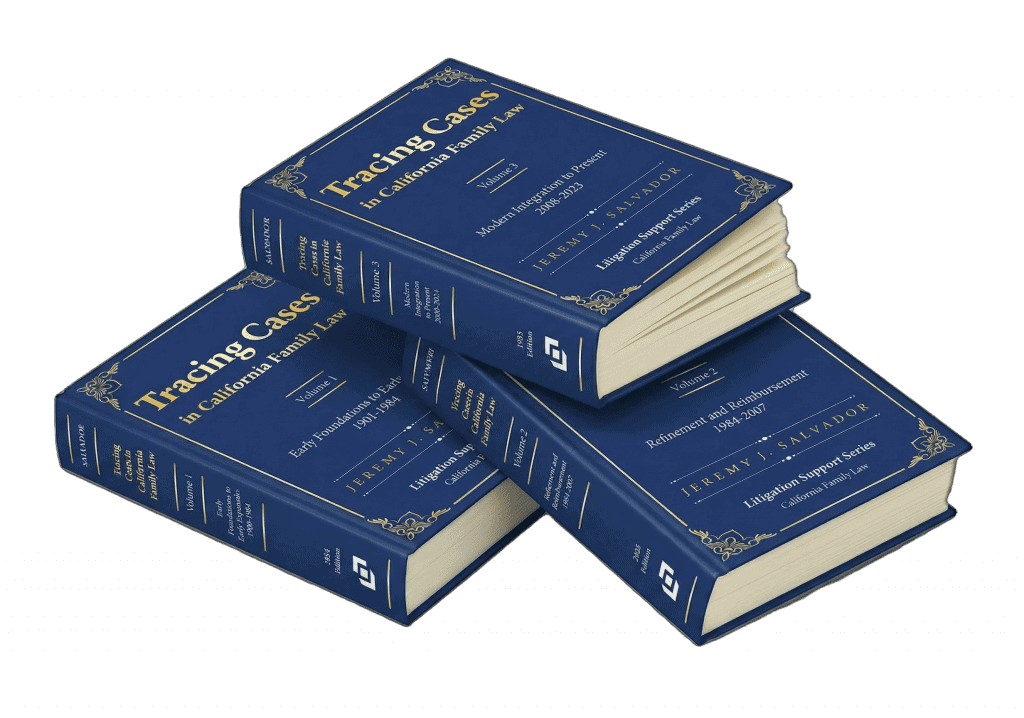
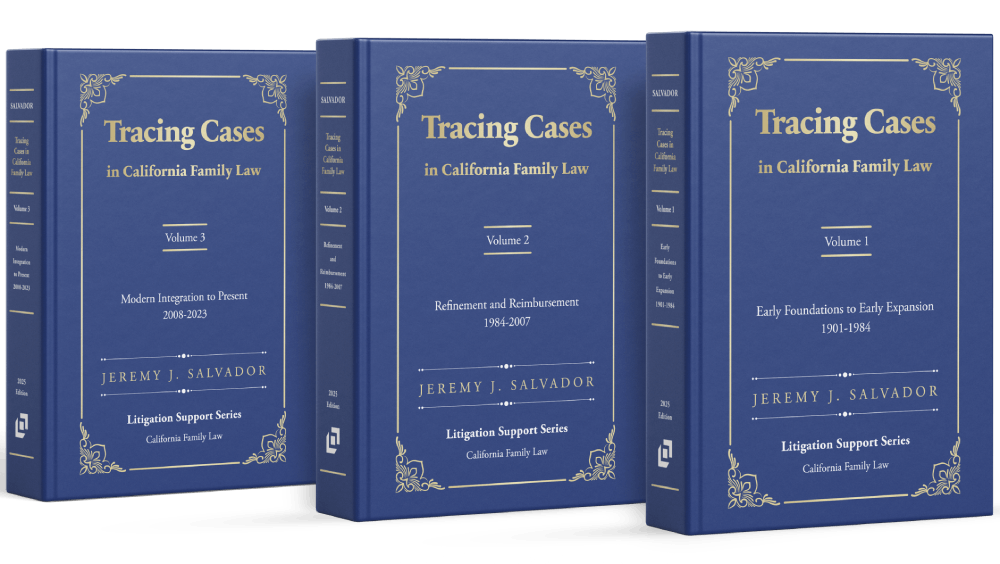
Tracing Cases in California Family Law is a three-volume litigation reference chronicling over 60 landmark decisions that define how California courts distinguish separate property from community property.
Volume 1 traces the doctrine's construction from the ground up, from the earliest 1900s of judicial reasoning through the foundational presumption rules and reimbursement principles solidified by 1984. Volume 2 follows those rules into their most demanding years, capturing how courts recalibrated tracing methodology across retirement benefits, business assets, and appreciation disputes between 1980 and 1999. Volume 3 brings the doctrine into the present, examining how 21st-century assets including stock options, deferred compensation, and cryptocurrency tested century-old principles through 2023.
What Drives This Work
Three decades of contested property disputes revealed one consistent gap: practitioners citing cases without understanding the doctrine behind them. This line of books was made to close that gap.
Our Mission
Making a century of California tracing precedent analytically accessible to every family law practitioner.
Our Vision
A courtroom where historical command over doctrine is standard preparation, not a competitive advantage.
Our Values
Chronological accuracy, doctrinal precision, and context that transforms isolated rulings into coherent legal strategy.
Our Objective
Three volumes. Sixty-five cases. One unbroken doctrinal record from 1901 to 2023.
Why Choose Us
Why Choose Us A Century of Precedent. Three Volumes. One Complete Picture.
-
01
Early Foundations (1901 – 1984)
Where California courts built commingling rules, presumption standards, and burden-shifting principles from scratch, with no prior blueprint to follow.
-
02
Doctrinal Refinement (1984 – 2007)
Where established rules met retirement accounts, appreciation claims, and federal tax intersections, they were never originally designed to address.
-
03
Contemporary Integration (2000–Present)
Where foundational doctrine absorbed stock options, deferred compensation, and a Supreme Court-level reset of joint-title presumptions.
-
04
Complete Strategic Framework
Sixty-five cases across twelve decades, structured for practitioners who argue from doctrine, not just authority.
Property Rights Are Decided by Precedent. Know Yours.